Choosing aquarium shrimp species: the complete guide
Compare Neocaridina, Caridina, Sulawesi, Amano and filter shrimp by water, behavior, breeding, difficulty and tank goal.
Written by
- Published
- Updated
- Reading time
- 6 min read
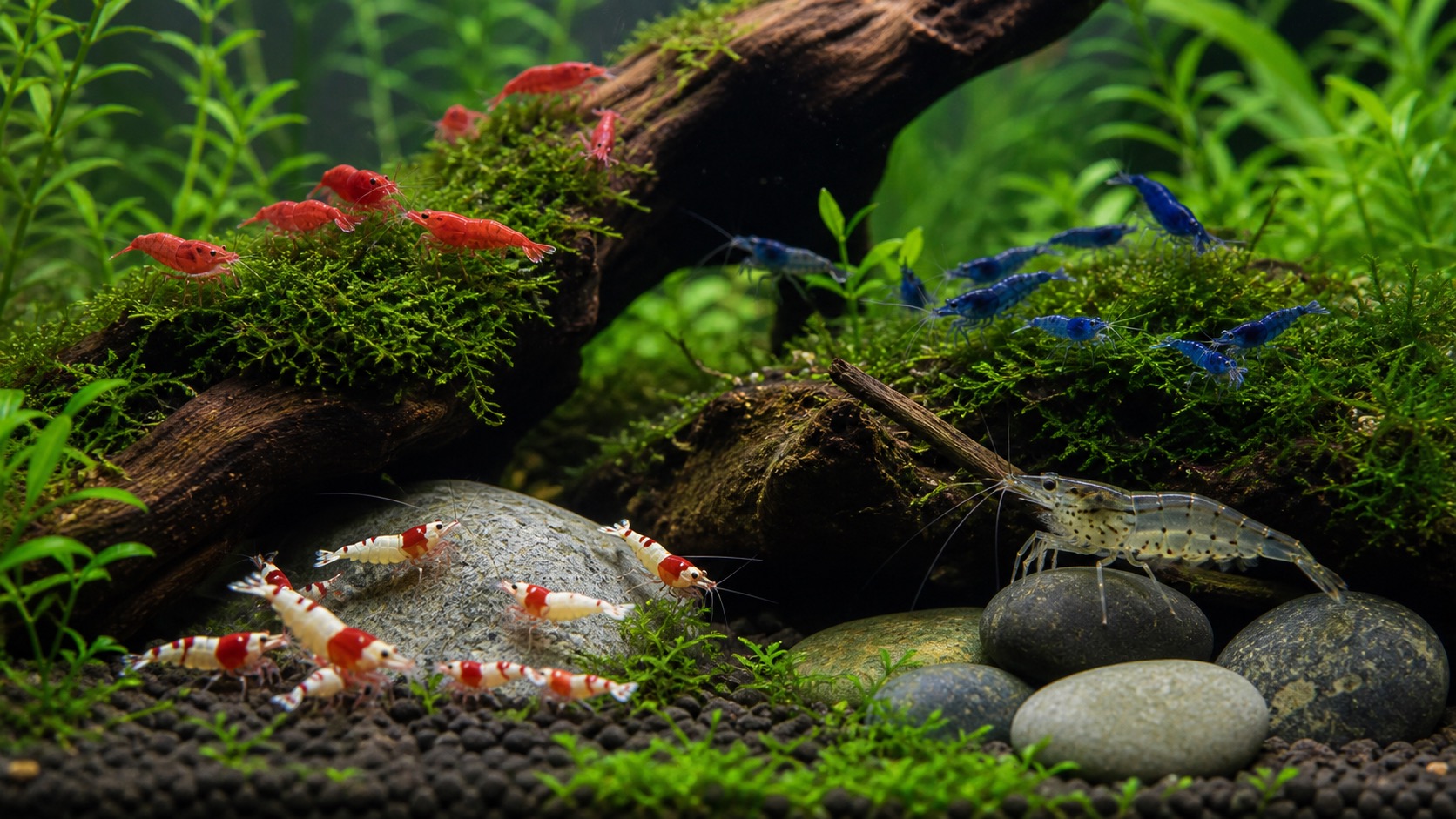
Choosing the right shrimp species is one of the most important decisions in the hobby. Not every shrimp belongs in the same aquarium. Red Cherry shrimp, Crystal Red shrimp, Taiwan Bee, Sulawesi Cardinal, Amano shrimp and filter shrimp differ in water, temperature, behavior, breeding and margin for error. A shrimp that looks "easy" in a shop can be the wrong animal for your water.
This guide helps you choose by system, not by color alone. First decide which water you can make reliably. Then look at experience, tank size, breeding goal, tank mates and maintenance. That prevents sensitive shrimp from going into a beginner tank and prevents breeding projects from failing because color lines were mixed.
The main hobby groups
Most aquarium shrimp in the hobby fit into five practical groups. Neocaridina are usually the best beginner group. Bee and Taiwan Bee Caridina need soft, acidic and stable water. Sulawesi shrimp need warm, alkaline and very mature water. Amano shrimp are strong algae grazers, but they do not complete their life cycle in normal freshwater. Filter shrimp catch food from flow and need a different tank from dwarf shrimp.
| Group | Examples | Difficulty | Best reason to choose | Main risk |
|---|---|---|---|---|
| Neocaridina | Red Cherry, Blue Dream, Yellow Neon, Bloody Mary | Beginner | Color, breeding, margin for error | Immature tanks, mixed colors, overfeeding |
| Bee and Taiwan Bee Caridina | Crystal Red, Crystal Black, King Kong, Blue Bolt, Pinto, Boa | Advanced to expert | Patterns, selective breeding, specialist lines | Wrong KH, exhausted active soil, fast water changes |
| Tiger and robust Caridina | Orange Eye Blue Tiger, Tangerine Tiger, Aura Blue | Intermediate | Interesting color and cross lines | Values differ by line and breeder |
| Sulawesi | Cardinal, Harlequin, White Glove | Expert | Unique species and behavior | Heat, oxygen, ammonia and immature tanks |
| Amano and filter shrimp | Amano, Bamboo, Vampire | Intermediate | Behavior, algae, filter feeding | Wrong feeding strategy or not enough flow |
Neocaridina: the best start for most keepers
Neocaridina davidi is the species behind many popular color lines: Red Cherry, Sakura, Fire Red, Bloody Mary, Blue Dream, Blue Velvet, Yellow Neon, Orange Sakura, Green Jade, Snowball, Chocolate and Rili. They are popular because they can live in a wide range of stable tap water, have direct developing young and quickly become a visible colony.
The main mistake is assuming all colors can be mixed without consequence. Many color forms are selected lines of the same species. If you mix Red Cherry, Blue Dream and Yellow Neon, offspring often become wild type or less predictable. That is not harmful to the animals, but it is bad if you want color-stable breeding.
Choose Neocaridina when you want a lively species tank, your first breeding colony or a clear beginner project. Buy locally bred shrimp from similar water and start with a group large enough to include both sexes.
Bee Caridina and Taiwan Bee: beauty with less margin
Crystal Red, Crystal Black, Taiwan Bee, King Kong, Panda, Wine Red, Blue Bolt, Pinto and Boa are not ideal first shrimp for an immature tank. They can be strong in the right system, but that system is different from a simple Neocaridina tank. It usually means RO water with GH+, active soil, low KH, stable temperature and small calm water changes.
For this group, buying from a good breeder matters. Ask for pH, GH, KH, TDS, temperature, water source, substrate and how long the line has been kept in those values. An expensive shrimp from very different water is more risk than a slightly less perfect shrimp from similar conditions. Also define your goal: a pretty Crystal Red group or serious selection for pattern, coverage and line quality.
Tiger Caridina often sit between simple and specialist shrimp. Some lines are robust, others need careful water. Orange Eye Blue Tiger, Tangerine Tiger and cross lines are used in breeding projects. The name alone is not enough; breeder values determine care.
Sulawesi shrimp: a separate system
Sulawesi shrimp such as Cardinal, Harlequin and White Glove come from a very different world than most dwarf shrimp in the hobby. They need warm, alkaline, oxygen-rich and very stable water. Do not treat a Sulawesi tank as a Bee tank with higher temperature or a Neocaridina tank with extra minerals. It is its own system.
The biggest risk is a tank that is too young or too polluted. Warm water holds less oxygen, metabolism is faster and ammonia becomes more dangerous at higher pH. Maturity, light feeding, oxygen and specific minerals matter. Buy these shrimp only when you want to build their system intentionally.
Many Sulawesi species are linked to unique and vulnerable lakes and habitats. That makes responsible keeping important: buy consciously, avoid impulse losses and support captive breeding when possible.
Amano shrimp: strong workers, not normal breeders
Amano shrimp are popular because they graze actively and help with soft algae growth in many community aquariums. They are larger, robust and often less shy than dwarf shrimp. They are not easy freshwater breeding shrimp. Adults live in freshwater, but larvae need a salty or brackish stage. In a normal freshwater aquarium, the larvae usually do not grow up.
Choose Amano shrimp for behavior, algae help and a strong larger shrimp, not for an easy breeding colony. They can take food from smaller shrimp and need a well-covered tank because they may climb or escape when stressed.
Filter shrimp: flow-feeders with special needs
Bamboo shrimp and Vampire shrimp are not grazing dwarf shrimp. They use fan-like legs to catch fine food from the current. A clean but empty tank with little suspended food is not a good system. They need flow, oxygen, stable water, calm tank mates and targeted fine food.
A warning sign is filter shrimp scraping the substrate constantly. That can mean they are not getting enough food from the water column. They are impressive and peaceful, but not ideal for small young nano tanks.
Combining species or keeping them separate?
Combining can work, but your goal determines whether it is wise. Keep Neocaridina colors separate if you want color-stable offspring. Keep Caridina lines separate if you want to preserve patterns or valuable lines. Do not combine shrimp with very different water needs. Sulawesi belongs in its own system. Filter shrimp can sometimes live with dwarf shrimp if tank size, flow and feeding are correct.
Fish make the choice harder. Many fish eat shrimplets, even if they ignore adults. If breeding matters, choose a shrimp-only tank or very calm micro tank mates with heavy moss and cover. If you mainly want a community display, accept lower shrimplet survival.
A practical choice route
- Want the easiest start and visible breeding? Choose Neocaridina.
- Want patterns, grading and soft-water selection? Build a Bee or Taiwan Bee system.
- Want unique warm specialist species? Choose Sulawesi only after preparation.
- Want algae help and behavior, not freshwater breeding? Choose Amano.
- Want a standout filter feeder? Choose Bamboo or Vampire shrimp in a larger flow tank.
- Want color-stable breeding? Keep lines separate.
- Want a community tank? Accept fewer surviving shrimplets or choose robust Neocaridina.
Shrimp species FAQ
What shrimp species is easiest?
Neocaridina davidi is usually easiest, especially locally bred Red Cherry or similar color lines in suitable tap water.
Can different Neocaridina colors live together?
Yes for a display tank, but not if you want color-stable offspring. Mixed offspring often revert to wild type or less stable patterns.
Are Caridina harder than Neocaridina?
Many Bee and Taiwan Bee Caridina have less margin because they usually need low KH, active soil and prepared RO water. Some Tiger lines are more robust, but breeder values still matter.
Do Amano shrimp breed in freshwater?
Adults live in freshwater, but the larvae need a salty or brackish stage. In a normal freshwater aquarium, larvae usually do not grow up.
Which shrimp should I choose for a nano tank?
For most nano tanks, Neocaridina are the most logical choice. Filter shrimp and many Sulawesi species need more specialized conditions.
Sources and review
Last content review: 2 August 2025.