Aquarium plants, algae and maintenance for shrimp: complete stable tank guide
Learn how to manage plants, algae, biofilm and maintenance in shrimp tanks: moss, epiphytes, light, CO2, fertilizer, plant quarantine and water changes.
Written by
- Published
- Updated
- Reading time
- 2 min read
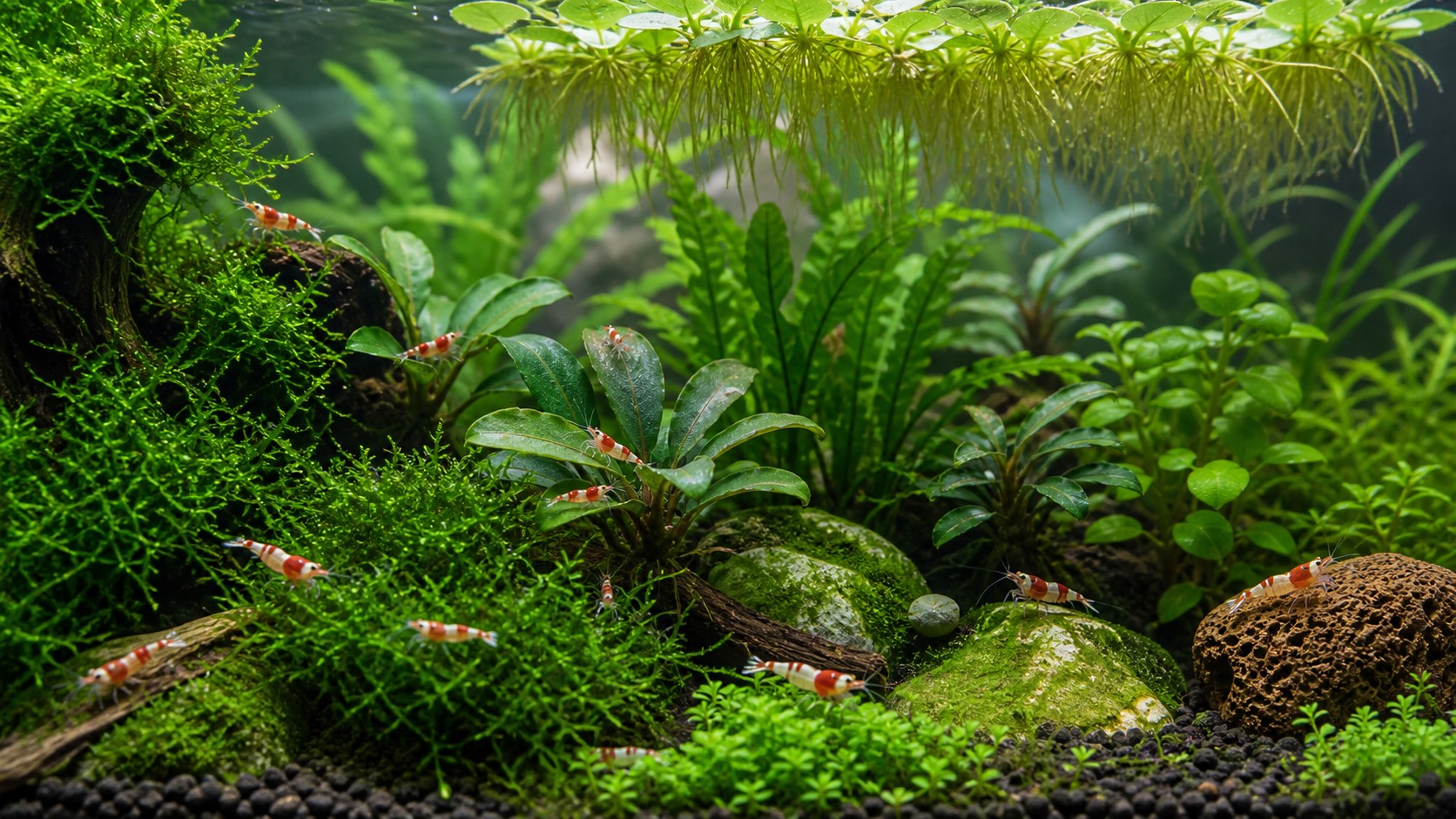
A good shrimp tank is alive, not dirty. Plants, moss, algae film and biofilm provide food, oxygen, cover and stability. Too much light, unstable CO2, heavy fertilizer, rotting plants, pesticide residues or over-cleaning can cause stress and deaths. The goal is balance: enough life for shrimp, enough maintenance for safe water.
Why plants help shrimp
Plants increase biofilm surface, shelter shrimplets, reduce sight lines and take up nutrients. Moss is especially useful because babies find micro food in it. Epiphytes such as Java fern, Anubias and Bucephalandra give grazing surface without disturbing substrate.
| Plant group | Shrimp benefit | Watch out |
|---|---|---|
| Moss | Biofilm and cover | Debris can collect |
| Epiphytes | Surface without substrate work | Do not bury rhizomes |
| Floaters | Nutrient uptake and shade | Too much shade |
| Stem plants | Fast growth | Pruning mess |
Biofilm, algae film and dirt
Biofilm and light algae film are normal food. Rotting leaves, thick sludge, dead zones and uneaten food are different. Keep grazing surfaces, remove dangerous buildup. A good shrimp tank has clear water, stable values and living surfaces.
Algae, light, CO2 and fertilizer
Algae usually reflects imbalance: too much light, unstable CO2, excess feeding, high nutrients, young tanks or weak plant growth. Shrimp eat some soft films, but they do not fix the root cause. Adjust light duration, food, water changes and plant mass before using chemicals.
Low-tech planted shrimp tanks are safest for most keepers. CO2 can work, but unstable CO2 changes pH and oxygen conditions. Fertilizer is not automatically forbidden, but dose carefully, avoid risky copper levels and observe shrimp after changes.
Plant quarantine and maintenance
New plants can carry snails, hydra, planaria, pesticide residues or melting leaves. Rinse and quarantine where possible. Add large plant masses cautiously, especially before introducing shrimp. Maintenance should be regular and targeted: small matching water changes, gentle filter cleaning in removed tank water, pruning in portions and removing rotting leaves.
Plants by shrimp system
Neocaridina tanks can use many easy plants, moss and floaters. Bee Caridina tanks need lower organic load and stable soft water. Sulawesi systems are warmer, alkaline and often rely more on mature hardscape. Filter shrimp need plants that do not block the flow.
Sources and review
Last content review: 29 April 2026.
- The Shrimp Farm: Disinfecting and quarantining aquarium plants
- The Shrimp Farm: Setting up a shrimp aquarium
- The Shrimp Farm: Shrimp tank water changes
- The Shrimp Farm: Understanding Carbonate Hardness
- Viau et al. 2020: Biofilm-based culture system for Neocaridina davidi
- Aquarium Co-Op: Aquarium algae guide
- Aqueon: Prevention and control of nuisance algae
- BucePlant: Best plants for a freshwater shrimp tank