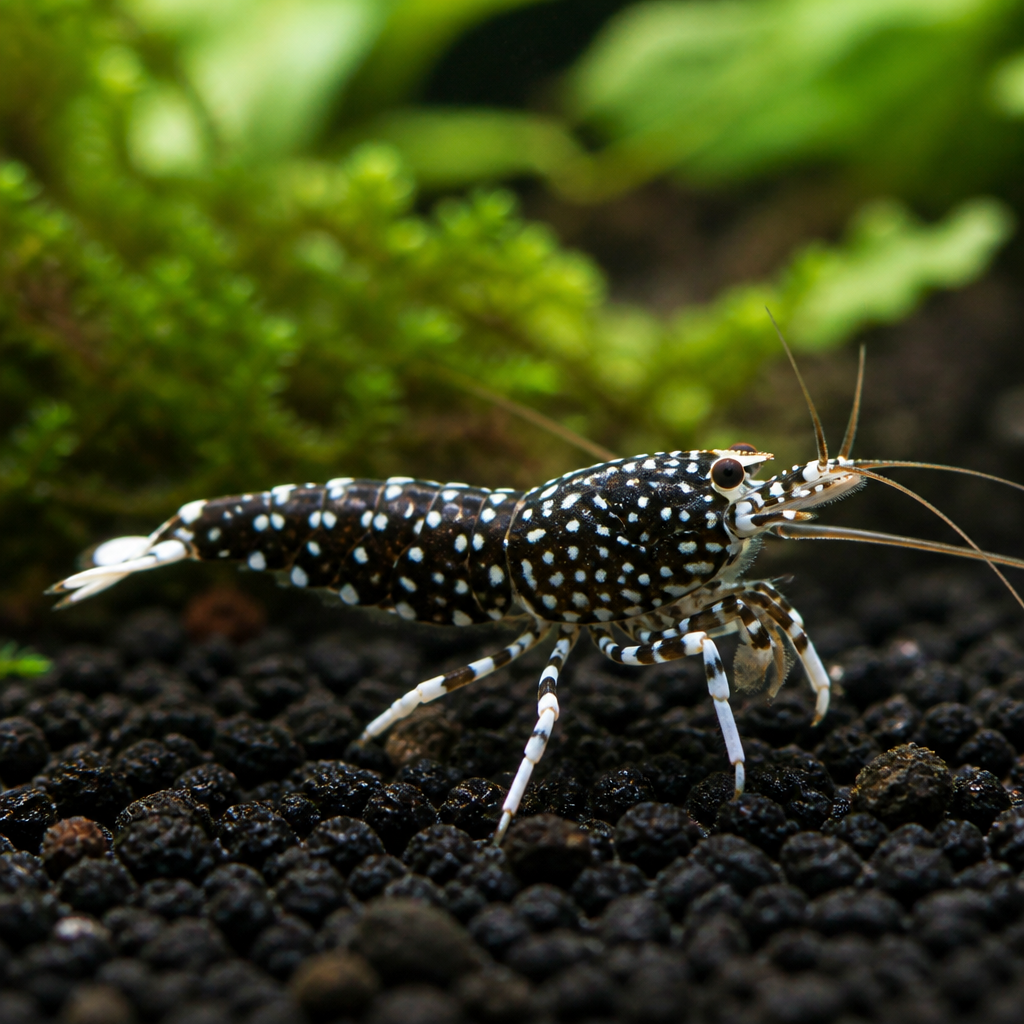
Sulawesi profile
Sulawesi White Glove shrimp
Caridina spinata
Sulawesi White Glove shrimp are specialist warm-water Caridina spinata. They need alkaline, stable Sulawesi-style water and a mature rocky aquarium.
Written by
- Published
- Updated
Quick verdict
Suitable for: Experienced keepers with a dedicated Sulawesi-style aquarium. Watch especially: keep warm and alkaline.
Quick care card
Use this card as a starting point. Always check whether your aquarium is stable enough for sensitive species.
Temperature
27 - 30 °C
pH
7.8 - 8.5
GH
5 - 8 °dH
KH
3 - 5 °dH
TDS
90 - 180 ppm
Aquarium
From 60 liters
Difficulty
Expert
Behavior
Peaceful sensitive Sulawesi shrimp that grazes hardscape and biofilm
Feeding
Biofilm, algae films, microorganisms and tiny fine foods
Breeding
Can breed in freshwater when warm alkaline conditions are mature and stable
Best match
Experienced keepers with a dedicated Sulawesi-style aquarium
Important
Do not use standard Bee shrimp care. Active soil, cool water, young tanks and unstable pH are poor matches for White Glove shrimp.
Care in practice
These are the points that most often make the difference between survival and a stable colony.
Use warm alkaline water around 27-30 degrees Celsius, pH 7.8-8.5 and stable Sulawesi-style remineralized RO water. Keep oxygen high and waste very low.
Use a mature species tank with inert substrate, rockwork, protected filtration and no active soil. Let biofilm develop before stocking.
Feed mostly through natural biofilm. Add tiny amounts of fine shrimp food, algae powder or biofilm support. Avoid large meals because these tanks are sensitive to waste.
White Glove shrimp are peaceful and should be kept in a calm group. Stress and unstable water quickly reduce activity and survival.
A species-only tank is best. Avoid fish, avoid cool-water shrimp and avoid soft acidic setups.
Breeding is freshwater with direct development, but young survival depends on mature biofilm, stable water and a safe filter intake.
Common mistakes are using active substrate, skipping tank maturation, keeping them too cool, feeding too heavily, mixing them with unsuitable fish and changing minerals too quickly.
Background and identification
Extra context helps you identify, compare and keep the species safely.
Caridina spinata is a Sulawesi shrimp associated with warm alkaline lake habitats. Its aquarium care should follow that environmental direction.
The line is known for darker body tones with contrasting pale or white front legs that create the "white glove" look. Appearance can vary by stress and line.
Compared with Cardinal shrimp, White Glove shrimp share the warm alkaline Sulawesi approach but have a different visual pattern and species identity. Compared with Bee shrimp, they require nearly opposite water chemistry.
Full species profile
The Sulawesi White Glove shrimp, Caridina spinata, is a delicate Sulawesi shrimp known for its contrasting white front legs or "gloves". It needs the same basic direction as other Sulawesi lake shrimp: warm, alkaline, mature and stable water.
Setup
Use a dedicated aquarium with inert substrate, rockwork, high oxygen and no active soil. A practical range is 27-30 degrees Celsius and pH about 7.8-8.5 with Sulawesi-style mineralized RO water. Let the tank mature until surfaces are rich in biofilm before adding shrimp.
Feeding and breeding
They graze biofilm and fine food from surfaces. Feed tiny amounts of fine shrimp food or algae-based food only as support. They can breed in freshwater, but success depends on stability and a calm species setup.
Frequently asked questions
Short answers to common questions about Sulawesi White Glove shrimp.
Sources and review
Last reviewed: June 15, 2026. Different values are used in the hobby; choose stability over chasing numbers.
Sources for accepted names, classification and synonyms.
Sources for water values, temperature and stable care.
Practical sources for setup, feeding, behavior and breeding.