Sulawesi profile
Sulawesi Cardinal shrimp
Caridina dennerli
Sulawesi Cardinal shrimp are warm-water Caridina dennerli from Sulawesi lake habitats. They need alkaline, very stable, mature conditions and should not be treated as beginner shrimp.
Written by
- Published
- Updated
Quick verdict
Suitable for: Experienced shrimp keepers with a dedicated Sulawesi aquarium. Watch especially: keep warm and alkaline.
Quick care card
Use this card as a starting point. Always check whether your aquarium is stable enough for sensitive species.
Temperature
27 - 30 °C
pH
7.8 - 8.5
GH
5 - 8 °dH
KH
3 - 6 °dH
TDS
80 - 180 ppm
Aquarium
From 60 liters
Difficulty
Expert
Behavior
Peaceful but sensitive Sulawesi shrimp that grazes constantly
Feeding
Biofilm, algae films, microorganisms and tiny controlled food portions
Breeding
Breeds in freshwater when warm alkaline conditions stay stable
Best match
Experienced shrimp keepers with a dedicated Sulawesi aquarium
Important
The main danger is using the wrong shrimp setup. Active soil, cool water, young tanks, unstable minerals and heavy feeding can quickly cause losses.
Care in practice
These are the points that most often make the difference between survival and a stable colony.
Use warm alkaline Sulawesi-style water: around 27-30 degrees Celsius, pH 7.8-8.5 and stable mineralized RO water with moderate hardness. Keep ammonia and nitrite at zero, nitrate low and oxygen high.
Use a dedicated mature rocky aquarium without active soil. Limestone-type rock, inert substrate, protected filtration, gentle but oxygen-rich flow and long maturation help build the biofilm these shrimp need.
Feed very lightly. Biofilm and algae films are the base, supported by tiny portions of fine shrimp food, algae-based food and mineral/biofilm support. Remove leftovers and avoid sudden nutrient spikes.
Cardinal shrimp are peaceful and spend much of the day grazing on rock and hardscape. Keep them in a group and avoid busy tank mates.
A species-only tank is strongly recommended. Avoid fish and avoid mixing with shrimp that need cooler, softer or acidic water.
Breeding is freshwater with direct development. Reliable breeding requires a mature tank, abundant biofilm, safe filtration and very stable warm alkaline water.
Common mistakes are using active soil, keeping them too cool, adding them to a young tank, using unstable minerals, feeding too much, combining them with fish and treating them like ordinary dwarf shrimp.
Background and identification
Extra context helps you identify, compare and keep the species safely.
Caridina dennerli comes from Sulawesi lake habitats. These systems are warm, alkaline and mineral-stable, which is why standard soft-water Caridina setups do not fit.
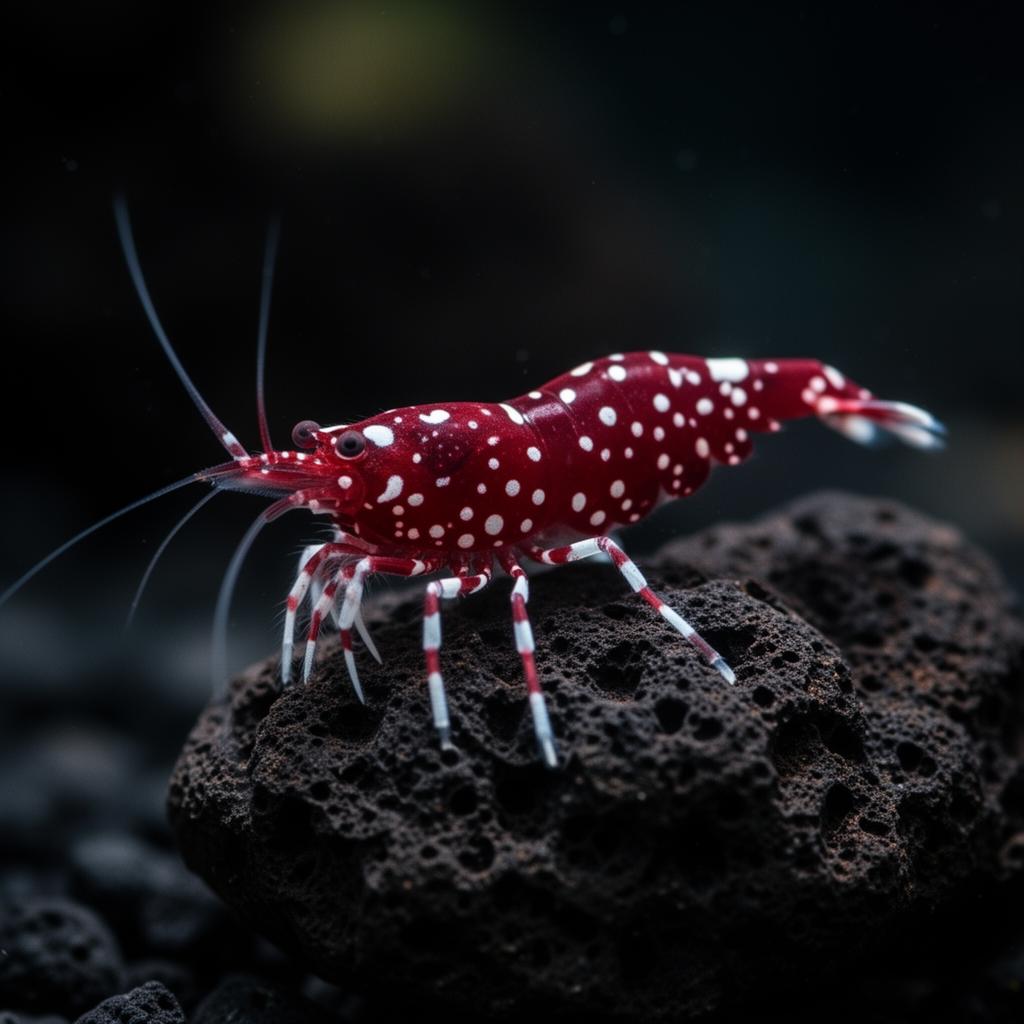
Cardinal shrimp are deep red to wine red with bright white spots and contrasting white front legs. Color and activity suffer quickly under stress.
Compared with Neocaridina and Bee shrimp, Sulawesi Cardinal shrimp need warmer and more alkaline water. They should not be placed on active substrate or in cool soft-water Caridina tanks.
Full species profile
The Sulawesi Cardinal shrimp, Caridina dennerli, is a striking red shrimp with white spots from the ancient lakes of Sulawesi. It is beautiful, but it is not a beginner shrimp. It needs warm, alkaline, very stable water and a mature biofilm-rich aquarium.
Water and setup
A practical range is 27-30 degrees Celsius, pH 7.8-8.5, moderate GH/KH and Sulawesi-style mineralized RO water. Do not use active soil. Use an old, stable rocky setup with high oxygen, low waste, protected filtration and many grazing surfaces.
Feeding and behavior
Cardinal shrimp graze constantly on biofilm, algae films and microorganisms. Feed very lightly with fine shrimp foods, algae-based foods and leaf or biofilm support. Heavy feeding quickly harms water quality.
Breeding
They breed in freshwater with direct development, but only when conditions are stable and mature. Young are small and need abundant biofilm and safe filtration.
Frequently asked questions
Short answers to common questions about Sulawesi Cardinal shrimp.
Sources and review
Last reviewed: June 15, 2026. Different values are used in the hobby; choose stability over chasing numbers.
Sources for accepted names, classification and synonyms.
Sources for water values, temperature and stable care.
Practical sources for setup, feeding, behavior and breeding.