Neocaridina profile
Rili shrimp
Neocaridina davidi var. Rili
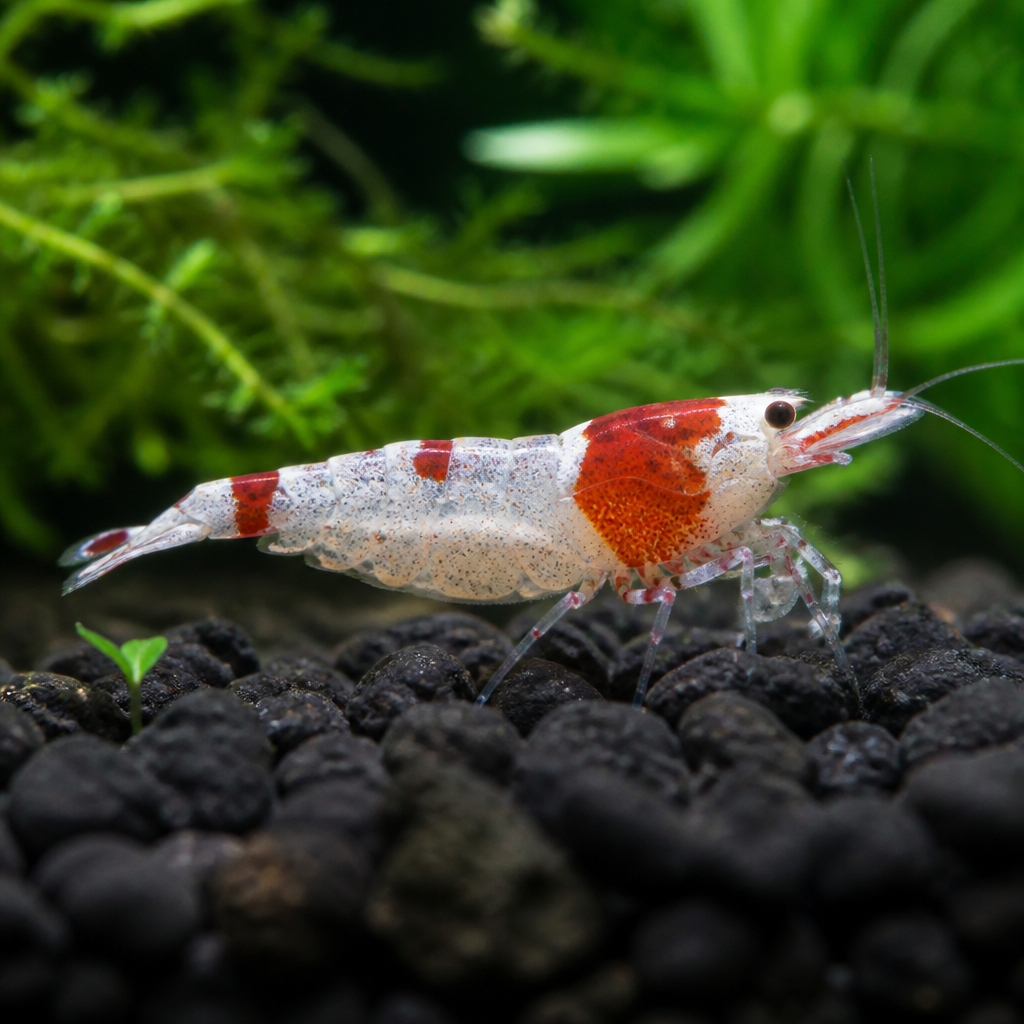
Rili shrimp are Neocaridina davidi with colored head and tail sections and a transparent middle. They are hardy, but pattern quality depends on selection.
Written by
- Published
- Updated
Quick verdict
Suitable for: Beginners with a fully cycled, stable aquarium. Watch especially: stability over perfect values.
Quick care card
Use this card as a starting point. Always check whether your aquarium is stable enough for sensitive species.
Temperature
18 - 28 °C
pH
6.5 - 8
GH
6 - 15 °dH
KH
3 - 10 °dH
TDS
150 - 350 ppm
Aquarium
From 20 liters
Difficulty
Easy
Behavior
Peaceful group shrimp that grazes throughout the day
Feeding
Biofilm, algae and light supplemental shrimp food
Breeding
Breeds readily in freshwater with direct development
Best match
Beginners with a fully cycled, stable aquarium
Important
Do not add these shrimp to a fresh or unstable aquarium. Most problems are caused by ammonia, nitrite, copper, water that is much colder than the tank, or rapid changes in pH, GH, KH and TDS. Do not mix different Neocaridina color lines if you want to preserve color-stable offspring.
Care in practice
These are the points that most often make the difference between survival and a stable colony.
A safe practical range is 18-27 degrees Celsius, pH 6.5-8.0, GH 6-12, KH 2-8 and TDS roughly 150-300 ppm. For active breeding, stable middle values usually work better than chasing extremes: around 22-24 degrees, neutral to slightly alkaline water and enough GH/KH for healthy molts. Test especially when you see molting problems, losses after water changes or declining breeding activity.
Use a well-cycled aquarium from 20 liters; 30 to 40 liters is easier to keep stable for a growing colony. Inert substrate, a sponge filter or protected intake, moss, fine plants, leaves and mature biofilm make the tank safer for adults and shrimplets. Dark substrate and plenty of cover reduce stress and make the color stand out more.
These shrimp graze all day on biofilm, algae, detritus and microorganisms. Add small amounts of quality shrimp food, leaf litter or blanched vegetables and remove leftovers if they remain. Overfeeding is more dangerous than skipping a day, because rotting food can quickly raise ammonia, nitrite and bacterial load.
Keep them in a group, preferably at least 10 to 20 animals, so the colony has enough males and females. They are peaceful, visible and active when the aquarium is calm. Sudden hiding often points to stress, predators, unstable water values or a recent disturbance.
A species-only tank is safest for maximum breeding. Small calm fish and snails can often live with adult shrimp, but almost all fish will eat shrimplets if they get the chance. Do not combine this color line with other Neocaridina colors if color purity matters, because offspring can drift back toward wild-type colors over generations.
These shrimp breed fully in freshwater. Females carry eggs under the abdomen for about 3 to 4 weeks, and the young hatch as tiny fully formed shrimp. No brackish-water stage is needed. A mature aquarium with biofilm, moss, fine food for shrimplets and a protected filter intake gives the best survival. Avoid large cleanups, hungry fish and sudden water changes while the colony is breeding.
Common mistakes are adding shrimp to an immature tank, correcting water values too quickly, using replacement water that is much colder than the aquarium, letting food rot, using medication or fertilizer containing copper, leaving filter intakes unprotected and mixing different Neocaridina color lines while expecting color-stable offspring.
Background and identification
Extra context helps you identify, compare and keep the species safely.
Rili shrimp are selectively bred Neocaridina davidi pattern lines derived from the broader East and Southeast Asian species complex.
Rili shrimp have a distinctive transparent middle section with colored head and tail. Pattern sharpness, color intensity and transparency vary by line.
Red, blue, yellow, orange, green, black, chocolate and Rili shrimp are usually color lines of Neocaridina. Their care is broadly similar, but color lines should be kept separate if you want predictable offspring. Crosses between colors are biologically harmless, but they often produce wild-type brown or gray young after a few generations.
Full species profile
Rili shrimp are patterned Neocaridina davidi with transparent body sections between colored areas. Care is simple when the aquarium is mature and stable.
Appearance
The classic Rili look has a colored head and tail with a clear middle section. The value of the line depends on clean contrast, strong color and stable pattern inheritance.
Water parameters and stability
A safe practical range is 18-27 degrees Celsius, pH 6.5-8.0, GH 6-12, KH 2-8 and TDS roughly 150-300 ppm. Stable middle values are better than chasing exact numbers. Stability matters more than perfection.
Aquarium setup
Use a mature aquarium with inert substrate, a sponge filter or protected intake, moss, fine plants, leaves and plenty of surfaces for biofilm. Dark substrate and cover reduce stress and can improve visible color.
Feeding
They mainly graze on biofilm, algae, detritus and tiny food particles. Supplement lightly with shrimp food, leaf litter and occasional blanched vegetables. Remove leftovers before they pollute the water.
Behavior and tank mates
Rili shrimp are peaceful group shrimp. Keep at least 10 animals, preferably more. Calm snails and very small peaceful fish may work with adults, but fish often eat shrimplets. A shrimp-only tank is best for breeding.
Breeding
They breed in freshwater with direct development. Females carry eggs for roughly 3 to 4 weeks, and the young hatch as miniature shrimp. Biofilm, moss and a shrimp-safe filter intake are key for survival.
Color and selection
Keep Rili shrimp separate from solid-color Neocaridina lines if you want to preserve the pattern. Selection is important because offspring can show too much color, too little color or wild-type markings.
Frequently asked questions
Short answers to common questions about Rili shrimp.
Sources and review
Last reviewed: June 15, 2026. Different values are used in the hobby; choose stability over chasing numbers.