Caridina profile
Panda shrimp
Caridina sp. Panda
Panda shrimp are black-and-white Taiwan Bee-type Caridina. They are peaceful but sensitive and need stable soft-water conditions.
Written by
- Published
- Updated
Quick verdict
Suitable for: Experienced Caridina keepers focused on stable water and selective breeding. Watch especially: adjust KH, GH and TDS slowly.
Quick care card
Use this card as a starting point. Always check whether your aquarium is stable enough for sensitive species.
Temperature
20 - 24 °C
pH
5.6 - 6.6
GH
4 - 6 °dH
KH
0 - 1 °dH
TDS
90 - 140 ppm
Aquarium
From 40 liters
Difficulty
Expert
Behavior
Peaceful but sensitive high-grade Caridina breeding shrimp
Feeding
Biofilm, fine shrimp food and very controlled supplemental feeding
Breeding
Breeds in freshwater when soft-water conditions remain very stable
Best match
Experienced Caridina keepers focused on stable water and selective breeding
Important
Do not treat these as easy beginner shrimp. High-grade Taiwan Bee, Pinto and Boa lines need stable soft water, low KH, active substrate, mature biofilm and careful feeding. Avoid rapid changes, warm water, high nitrate, exhausted substrate and mixed-line breeding without a clear goal.
Care in practice
These are the points that most often make the difference between survival and a stable colony.
Use remineralized RO water with active substrate. A practical range is 19-23 degrees Celsius, pH about 5.6-6.6, GH 4-6, KH 0-1 and TDS roughly 100-150 ppm. Keep values stable and change water slowly with closely matched temperature and mineral content.
Use a mature, dedicated Caridina tank with active substrate, gentle filtration, moss, leaf litter and lots of biofilm. A protected intake is essential for shrimplets. Let the aquarium mature well before adding expensive breeding stock.
Base feeding on biofilm and small controlled portions of quality shrimp food. Use powdered food carefully for shrimplets and remove leftovers. Overfeeding is one of the fastest ways to destabilize a soft-water Caridina tank.
Keep a calm group with enough animals for breeding, usually at least 10 if budget allows. They are peaceful, but stress from fish, frequent disturbance or unstable maintenance quickly affects color, molting and breeding.
A dedicated shrimp-only breeding tank is the safest choice. Avoid fish and avoid mixing different high-grade lines unless you are intentionally planning crosses and tracking offspring.
These lines breed in freshwater with direct development, but reliable breeding depends on mature biofilm, low-stress conditions and stable soft water. Select breeding stock carefully and cull or separate animals that do not fit the line goal.
Common mistakes are buying expensive shrimp before the tank is mature, using unstable tap water, allowing KH or nitrate to rise, overfeeding, changing too much water at once, mixing lines without records and selecting only for pattern while ignoring health and fertility.
Background and identification
Extra context helps you identify, compare and keep the species safely.
These are selectively bred aquarium Caridina lines, usually built from Bee shrimp, Taiwan Bee and Pinto-related breeding backgrounds. Treat trade names as breeding-line names rather than wild species names unless exact lineage is documented.
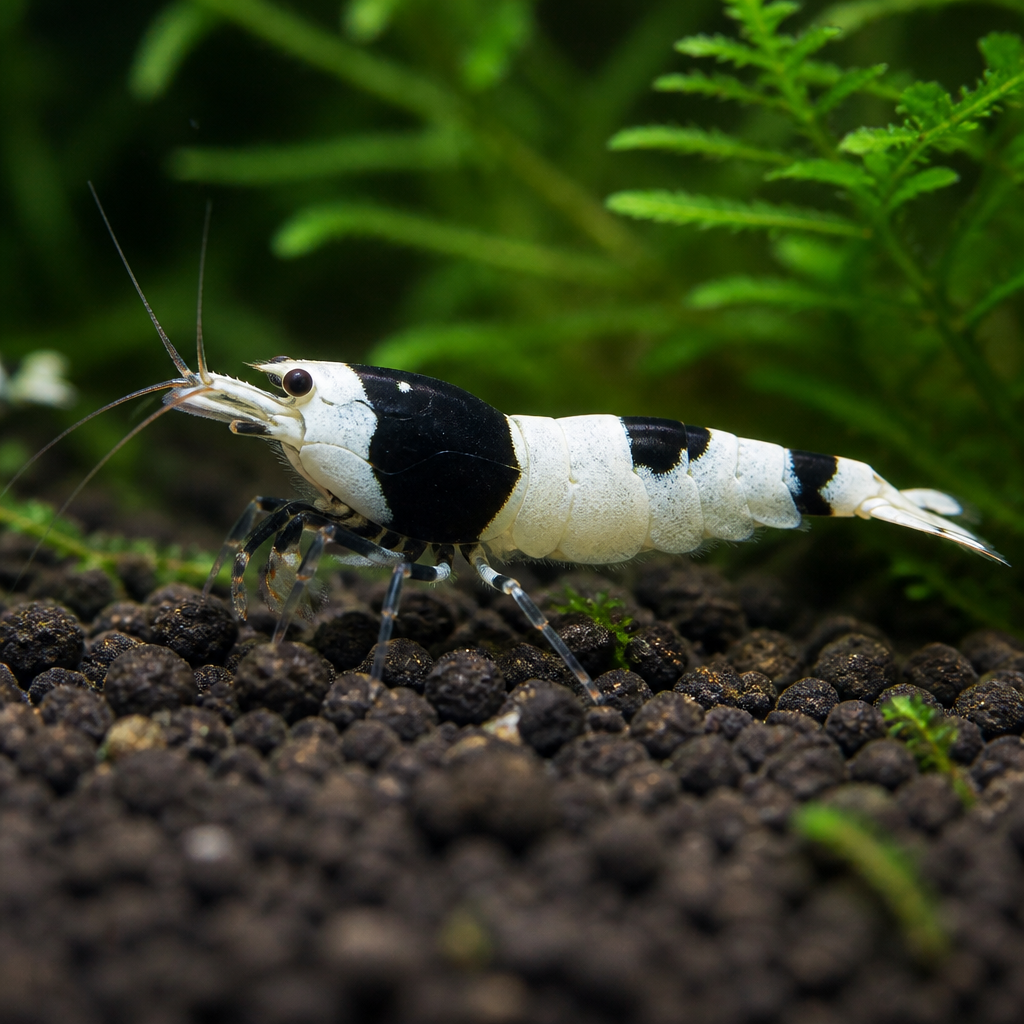
Panda shrimp show black and white patches, usually with more white contrast than very dark King Kong shrimp. Clean pattern edges and strong color are desired.
Panda shrimp are closely related in care to King Kong shrimp, but the visual goal is a more balanced black-and-white pattern.
Full species profile
Panda shrimp are black-and-white Taiwan Bee Caridina with a bold contrast pattern. They suit experienced keepers who can keep soft water stable.
Appearance
The pattern combines black body sections with white markings. Line quality determines contrast, white coverage and pattern sharpness.
Water parameters
Use remineralized RO water with active substrate. A practical range is 19-23 degrees Celsius, pH about 5.6-6.6, GH 4-6, KH 0-1 and TDS roughly 100-150 ppm. Stability matters more than chasing a single exact value.
Aquarium setup
Use a mature dedicated Caridina aquarium with active substrate, gentle filtration, moss, leaf litter and protected intakes. Let the tank develop stable biofilm before adding valuable breeding animals.
Feeding
Feed lightly. Biofilm and microfauna are the base, with small amounts of quality shrimp food and occasional fine powdered food for shrimplets. Overfeeding can quickly destabilize soft-water tanks.
Behavior and tank mates
Panda shrimp are peaceful but sensitive. Keep them in a calm shrimp-only tank for best breeding results. Fish and frequent disturbance reduce shrimplet survival and can suppress breeding.
Breeding and selection
Keep Panda shrimp in a dedicated line if you want stable offspring. Crosses with King Kong or other Taiwan Bee lines are possible but should be intentional.
Frequently asked questions
Short answers to common questions about Panda shrimp.
Sources and review
Last reviewed: June 15, 2026. Different values are used in the hobby; choose stability over chasing numbers.
Sources for accepted names, classification and synonyms.
Sources for water values, temperature and stable care.
Practical sources for setup, feeding, behavior and breeding.